Showing posts with label scientists. Show all posts
Showing posts with label scientists. Show all posts
Tuesday, July 19, 2016
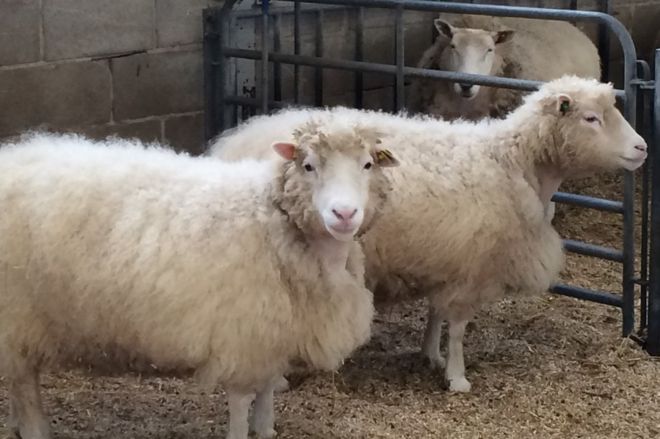
Are Cloned Animals Born Old?

Monday, May 23, 2016
Secret Life of Animals, Captured on Camera

Scientists trying to learn about the lifestyles of elusive critters (tigers and cougars come to mind) have their work cut out for them. Many animals will smell or hear a researcher long before the researcher sees them. As for observing nocturnal animals? Forget it. But in the last few years, many wildlife researchers studying animals in their natural habitat have had a technological assist from camera traps. These devices lie in wait until a passing animal triggers their motion sensor.
Friday, March 18, 2016
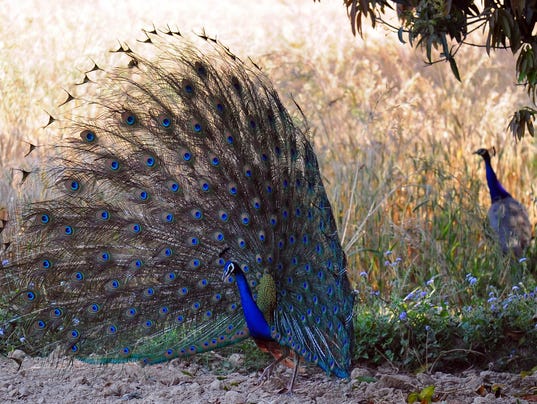
Researchers: Female Animals May Be Less Colorful to Avoid Harassment
http://tinyurl.com/hzsmknd
Tuesday, February 2, 2016
Oxygen-Free Animals Don't Exist After All
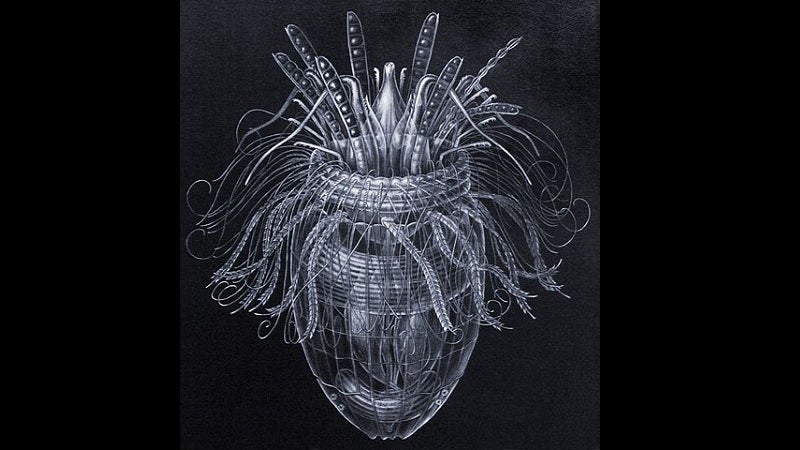
In 2010 a group of scientists announced that they’d found evidence of multi-cellular life in hyper-salty, oxygen-free pools at the bottom of the ocean. A new study indicates that what they thought were living animals were actually corpses taken over by bacterial “body-snatchers.” Scientists from the Woods Hole Oceanographic Institution have published a paper in BMC Biology that dashes the hopes of biologists on Earth and those who hope to find life in extreme conditions on other planets. Their findings cast doubt on whether or not metazoans can ever live entirely without oxygen.
Friday, May 8, 2015
The Whale Too Big for Its Own Good

For decades, scientists have tried to solve a deadly puzzle: Why can’t highly intelligent blue whales avoid the collisions with ships that are a leading cause of mortality for the endangered marine mammals? The short answer, according to a first-of-its-kind study, is that they have never learned to steer clear of big objects like ships. The largest animal that’s ever lived, at more than 100 feet long and 320,000 pounds, the blue whale for 30 million years never had to move out of anything’s way.
Tuesday, April 21, 2015
Study Reveals People's Hormonal Link With Dogs

Dogs are called "man's best friend" - women's, too - and scientists say the bond between people and their pooches may be deeper than you might think. Researchers in Japan said on Thursday oxytocin, a hormone that among other things helps reinforce bonds between parents and their babies, increases in humans and their dogs when they interact, particularly when looking into one another's eyes. They described a series of experiments that suggest that people and their canine companions have mutually developed this instinctual bonding mechanism in the thousands of years since dogs were first domesticated.
http://tinyurl.com/l58duxy
Thursday, January 8, 2015
200 Year Old Whale Offers Clues to Living Longer

Scientists are hoping the fountain of youth might be hidden inside a whale species that can live up to 200 years. Joao Pedro de Magalhaes and his team at the University of Liverpool sequenced the genome of the bowhead whale, the longest living mammal on earth. The team wanted to understand why they live so long and don't succumb to some of the same illnesses as humans do earlier in life. "One of the big mysteries of biology is understanding species differences including species differences in aging," Magalhaes told CBS News.
http://tinyurl.com/ncjo3z3Monday, October 13, 2014
Killer Whales Learn to Speak Dolphin

Are killer whales multilingual? A new study from the Hubbs-SeaWorld Research Institute has found that captive orcas kept with bottlenose dolphins adopt the signature clicks and whistles of their tank mates. But some scientists question claims made in the paper that this knowledge can benefit endangered orca populations in the wild.
http://tinyurl.com/krf98duFriday, September 26, 2014
New Deep Sea Species Found Off Australian Coast

Scientists say two new animal species discovered off the Australian coast in 1986 have the potential to "reshape the tree of life." A study in scientific journal PLOS ONE describes the mushroom-shaped organisms for the first time since their discovery. Although the organisms, known as Dendrogramma enigmatica and Dendrogramma discoides, resemble extinct forms from more than 600 million years ago, scientists have not classified them into an existing animal group.
http://tinyurl.com/nkrr8e3
Thursday, August 21, 2014
Humpback Whale Breaches Off New York City

http://tinyurl.com/m7tr7fv
Monday, August 11, 2014
Meet the World’s Newest Dolphin Species

Welcome the newest addition to the Flipper family, the Australian humpback dolphin. The Australian humpback dolphin has been around for millennia. We just didn’t know it, as the species was lumped in with other humpback dolphins that roam the world’s oceans. But in a new study, scientists say they’ve solved a 300-year-old taxonomic riddle, declaring that the Down Under dolphin is a separate species from its African and Asian relatives.
Wednesday, June 11, 2014
Scientists Tagging Sharks To Predict Hurricanes

http://tinyurl.com/p24g2kd
Wednesday, March 12, 2014
Elephants Can Tell One Language From Another

http://tinyurl.com/ptgoxq4
Thursday, January 23, 2014
Brazil Dolphin First New River Species Since 1918

http://tinyurl.com/ovh7veg
Thursday, December 19, 2013
Ancient Chinese Cat Shakes Up Domestication Theory
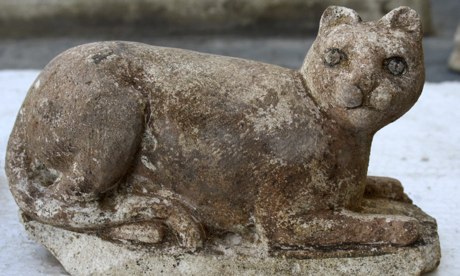
A cat-and-mouse game played out in a Chinese village 5,300 years ago is helping scientists understand how wild felines became the tame pets we know today. Scientists believe it was the cat's appetite that led to domestication. Grain stored by ancient farmers was a magnet for rodents, which in turn attracted wild cats. Over time, the cats adapted to village life and became tame around their human hosts. This is, at least, the leading theory, derived from archaeological evidence in the Middle East, rather than China. But bones recently discovered in a Chinese village add weight to the idea that felines took on pest-control duties in ancient times, says researcher Fiona Marshall of Washington University in St. Louis.
http://tinyurl.com/nbdm77y
Tuesday, August 20, 2013
Cute New Animal Discovered

The animal kingdom just got a lot cuter. Scientists have discovered a a new species of mammal — a raccoon-like furball with the face of a teddy bear.
Tuesday, June 19, 2012
Bears Can 'Count' And Compare Numbers, Showing Cognitive Ability, Scientists Say
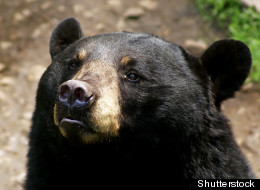
If there's anything more impressive than a bear's size, it's its intelligence. Bears can learn to ride bicycles, use tools, and as new research shows, "count." Scientists trained three American black bears (Ursus Americanus) to discriminate between groups of dots on a touchscreen computer: Two bears learned to pick the group with fewer dots, while the third learned to choose the group with more dots.
Wednesday, March 21, 2012
Video: Hibernating Black Bears Could Have Supernatural Healing Abilities

A new discovery that hibernating black bears have a remarkable ability to heal has scientists scratching their heads, but it could be exciting news for human medicine. Researchers found that despite a huge drop in heart rate, metabolism and body temperature, hibernating black bears are able to heal without any scars or infections.
Monday, September 19, 2011
12 New Frog Species Discovered
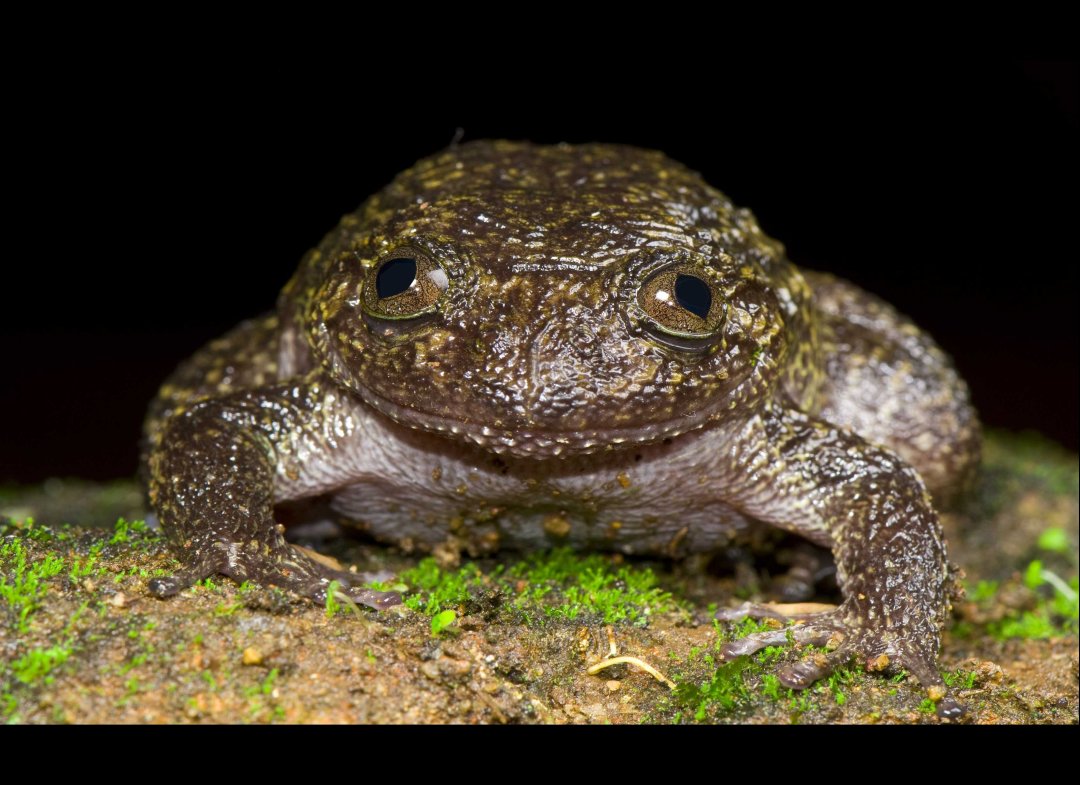
Years of combing tropical mountain forests, shining flashlights under rocks and listening for croaks in the night have paid off for a team of Indian scientists which has discovered 12 new frog species plus three others thought to have been extinct.
Subscribe to:
Posts (Atom)