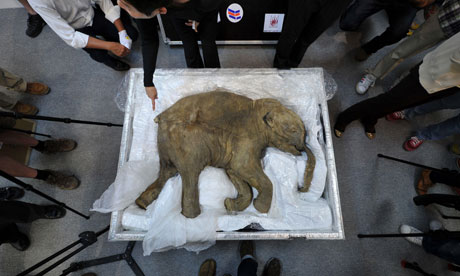
Will it one day be possible to bring a woolly mammoth or a Neanderthal back to life? If so, should we? How is climate change affecting the evolution and extinction of species? These are some of the questions explored in science writer Maura O’Connor’s new book, Resurrection Science: Conservation, De-Extinction And The Precarious Future of Wild Things. Traveling the world from Kenya (in search of the white rhino) to a lab in California (where a geneticist is trying to resurrect the extinct passenger pigeon), O’Connor reports on the people and places on the front lines of what has become known as resurrection science.
Igor Purlantov Favorite quote: “The greatness of a nation and its moral progress can be judged by the way its animals are treated” - Mahatma Gandhi
Showing posts with label woolly mammoth. Show all posts
Monday, September 21, 2015
Friday, August 23, 2013
How to Bring Extinct Animals Back to Life
The passenger pigeon, the dodo and the woolly mammoth are just a few of the species wiped off the Earth by changing environments and human activities. Now, advances in biotechnology could enable scientists to bring extinct animals back from the grave. But critics argue the practice would only hinder conservation efforts, by resurrecting creatures that could not survive in the wild.
Wednesday, July 31, 2013
Woolly Mammoth DNA May Lead to Its Resurrection
The pioneering scientist who created Dolly the sheep has outlined how cells plucked from frozen woolly mammoth carcasses might one day help resurrect the ancient beasts.
http://tinyurl.com/ldytuuc
Monday, August 22, 2011
40,000 Year Old Baby Mammoth Discovered
A man herding reindeer in Russia's Arctic found the perfectly-preserved, 40,000-year-old body of a baby woolly mammoth.
Labels:
animals,
artic yamalo-nenetsk,
baby,
elephants,
extinct,
igor,
igor purlantov,
lyuba,
permafrost,
pets,
purlantov,
reindeer,
russia,
woolly mammoth
Subscribe to:
Posts (Atom)